Beyond Description — Winter Forms and Textures on Mt. Takao’s Trail No. 6
Late February, 3:00 PM.
Under the gently declining light of a winter afternoon, I found myself once again walking the familiar paths of Mt. Takao.
Having visited this mountain countless times, one might think there is nothing left to explain. Yet each return quietly reveals something new. This time, my steps naturally led me to Trail No. 6 — a route where water, terrain, and vegetation intertwine most intimately. For a landscape designer, it offers an inexhaustible field of observation, particularly through the lens of form and texture.
Strata of Time Beneath the Feet
The ground speaks first.
Layered rock surfaces lie exposed like fragments of geological time itself. Scattered stones and fine gravel resist uniformity; variations in size generate delicate rhythms of light and shadow beneath one’s feet. Fallen leaves and dry wood pieces rest without intention, softening the mineral hardness with subtle organic contrast.

Lines of Winter Structure
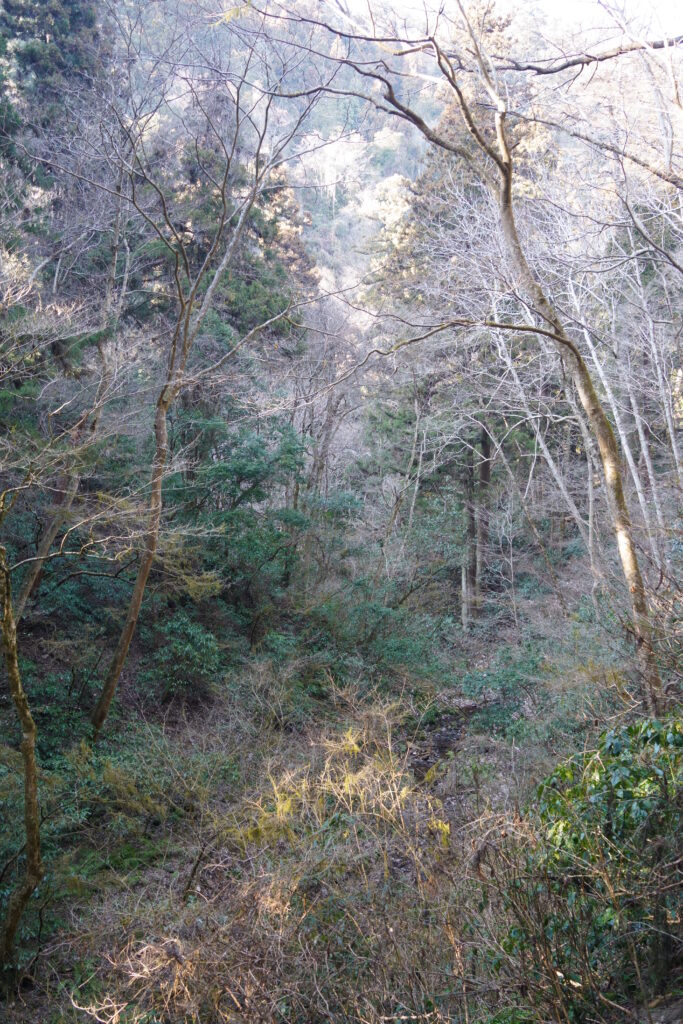
Raising my eyes, the forest transforms into lines.
Winter-stripped trees relinquish their mass, revealing pure structure. Vertical trunks converse with gently curving branches, their intersections weaving depth into the air. Subdued winter colors — muted browns, deep evergreen tones — allow spatial composition to emerge with remarkable clarity.
Textures of the Living Path
Trail No. 6 itself feels inseparable from its surroundings.
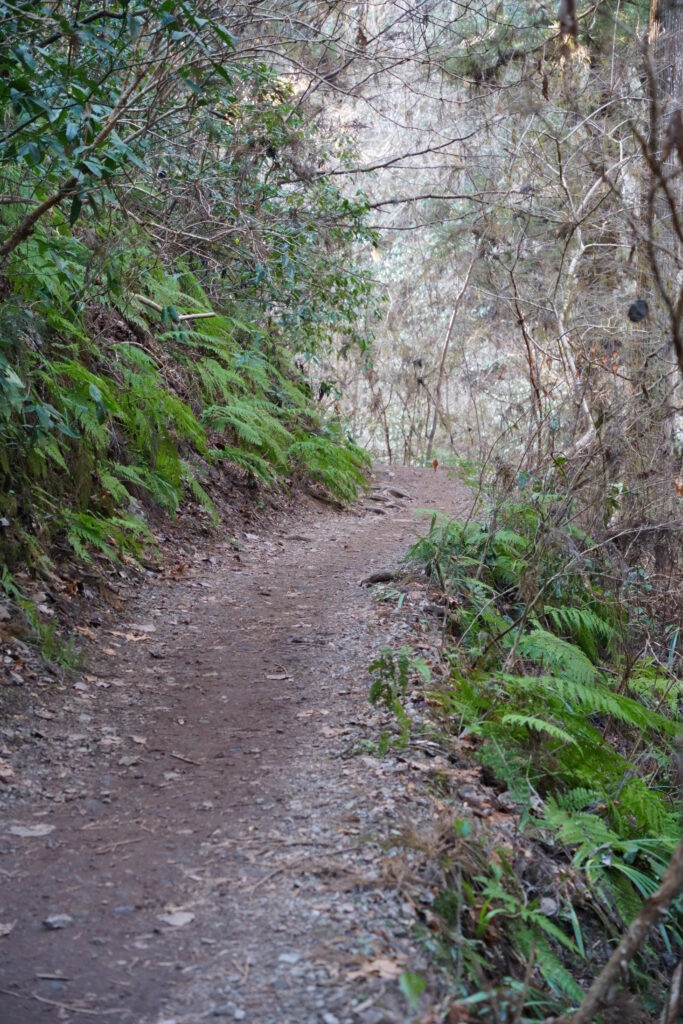
The earthen path is never overly refined. Small stones, exposed roots, and slight irregularities create a tactile richness that no artificial surface could convincingly replicate. Fern-covered slopes introduce soft volumetric forms, while sparse branches lend permeability and lightness to space.
Equilibrium of Stone and Wood
Descending toward the valley, stone and water dominate.
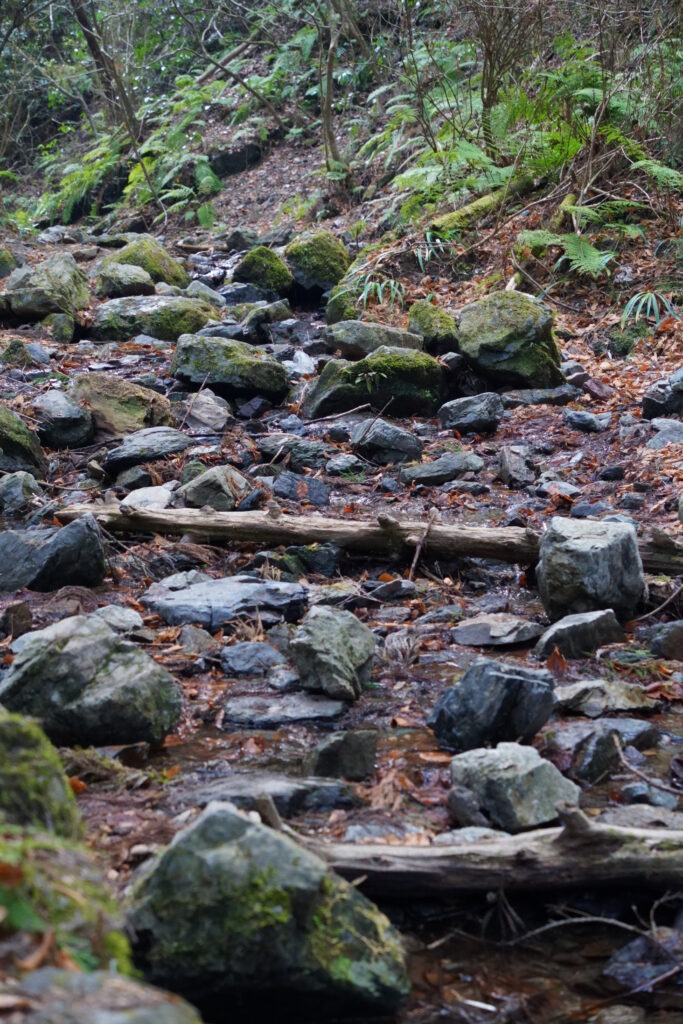
Rocks and gravel of varying scales appear randomly dispersed, yet an undeniable equilibrium governs their arrangement. Moist stone surfaces carry subdued reflections; moss lends breath and softness to otherwise rigid mineral forms. A fallen log, cutting horizontally through the scene, becomes an unassuming yet powerful stabilizing line.
Where Water Unifies Texture
Then, the stream — the defining presence of this trail.
Water refuses straightness. It bends around stone masses, trembles across minute changes in elevation, and traces quiet meanders through the terrain. The surface mirrors surrounding colors, dissolving leaves, stone, and moss into a single, continuous visual texture.
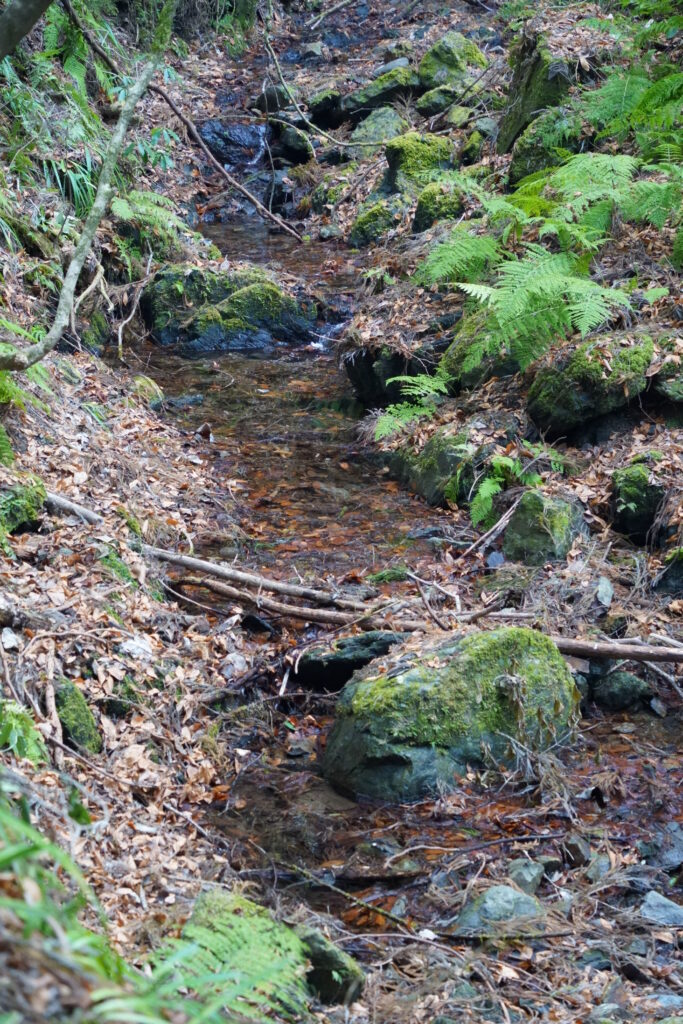
Here, textures converse endlessly:
the density of wet stone, the fine nap of moss, the fibrous decay of wood, the fragile layer of fallen leaves. Opposing qualities — rough and smooth, dry and wet, static and moving — coexist without conflict.
No matter how often one visits, Mt. Takao never repeats itself.
Light, humidity, season, and perspective continuously reshape the landscape. What seems fully understood inevitably resists final interpretation. Perhaps this is why the mountain remains so compelling — an ever-changing composition of form, material, and time.
On this winter afternoon, Trail No. 6 once again offered its quiet lessons.